If you’ve ever walked out of the house looking like you dusted your face with chalk, you already know the central tension of mineral sunscreen: the same active ingredient that makes it so gentle and effective — zinc oxide — is a white, physical pigment that scatters light, and on deeper skin tones it can leave a visible grey or white tint that lasts all day. Mineral sunscreens work by sitting on top of your skin and physically deflecting UV rays, unlike chemical sunscreens, which absorb into the skin and convert UV energy into heat. For people with sensitive, reactive, or rosacea-prone skin, the mineral route is almost always the dermatologist recommendation — zinc oxide is inherently non-irritating and broadly effective against both UVA (the aging ray) and UVB (the burning ray). The challenge is finding a formula where the protection is real, the finish is wearable, and your face doesn’t look like a mime’s.
This guide is for buyers who already know they want zinc oxide but are stuck on the white cast question. We’ll break down exactly why cast happens, what formulation variables actually reduce it, which products consistently earn praise from sensitive-skin reviewers, and how to match a formula to your skin tone and use case.
| EDITOR'S PICK[ISDIN Eryfotona Ageless Tinted](https://www.amazon.com/dp/B07ZZFYNKL?tag=greenflower20-20)… | Mid-tier[EltaMD UV AOX Elements Tinted F](https://www.amazon.com/dp/B079YXK3L8?tag=greenflower20-20)… | Budget pick[EltaMD UV Clear Face Sunscreen](https://www.amazon.com/dp/B002MSN3QQ?tag=greenflower20-20)… | |
|---|---|---|---|
| Tint | ✓ | ✓ | ✗ |
| Size | — | 1.7 oz | 1.7 oz |
| Key Additives | DNA Repairsomes | Antioxidants | — |
| Price | $50.00 | $46.00 | $45.00 |
| See on Amazon → | See on Amazon → | See on Amazon → |
Why White Cast Happens — and What Formulations Do About It
White cast isn’t a quality flaw. It’s physics. Zinc oxide particles are white and reflective; when you apply a layer of them to skin, they bounce visible light back at observers. The intensity of the cast depends on three variables: particle size, concentration, and whether the formula includes tinting agents or skin-toned pigments.
Particle size is the most important lever. Standard (non-micronized) zinc oxide uses particles in the 200–500 nanometer range — large enough to scatter visible light strongly, hence the classic white lifeguard look. Micronized zinc oxide reduces particle size to roughly 50–200 nm, which shifts scattering behavior toward shorter wavelengths; the result is a much more transparent finish. Nano-scale zinc (under 100 nm) goes further, approaching near-invisibility on skin.
Here’s where the trade-off becomes explicit: the EWG’s Guide to Sunscreens notes ongoing scientific discussion about whether nano-scale zinc particles can penetrate compromised skin barriers more readily than larger particles. The FDA’s current sunscreen monograph does not restrict nano zinc, and the American Academy of Dermatology (AAD) holds that there is no evidence of harm at concentrations used in topical sunscreens — but buyers who want to stay conservative can choose micronized (not nano) formulas and accept a slightly more visible finish.
Concentration matters too. A formula with 20–25% zinc oxide will be significantly more opaque than one with 10–12%. Broad-spectrum coverage at lower concentrations is achievable, but manufacturers often compensate by layering in titanium dioxide (another mineral UV filter) or by boosting zinc purity. For sensitive skin specifically, titanium dioxide is also well-tolerated, and a blended mineral formula (zinc + titanium) at moderate concentrations often hits the sweet spot of coverage and wearability.
Tinted formulas sidestep the optical problem entirely by adding iron oxide pigments that counteract the white reflection with warm or neutral undertones. The bonus: iron oxides block visible light, including high-energy visible (HEV) light, which research published in journals indexed by the National Institutes of Health (NIH/NCBI) links to hyperpigmentation in darker complexions. For anyone dealing with melasma or post-inflammatory hyperpigmentation, a tinted mineral SPF is arguably better protection than a clear one.
By the Numbers
| Variable | Effect on Cast | Trade-off |
|---|---|---|
| Standard zinc (200–500 nm) | High white cast | Maximum opacity, easiest to formulate |
| Micronized zinc (50–200 nm) | Moderate cast | Balanced transparency and coverage |
| Nano zinc (<100 nm) | Minimal cast | Active debate on skin penetration |
| Tinted formula (iron oxides added) | Near-invisible | Color-match dependent; limited shade range |
What Sensitive Skin Actually Needs From a Formulation
White cast is the most visible complaint, but for genuinely sensitive or reactive skin, the ingredient list beyond the actives matters just as much. The Skin Cancer Foundation notes that mineral filters are preferred for sensitive skin because they work on the surface rather than being absorbed — but a zinc oxide sunscreen packed with fragrance, alcohol, or occlusive silicones can still trigger flares.
Fragrance-free is non-negotiable. Fragrance (listed as “parfum” or individual fragrant botanicals like lavender essential oil) is the leading cause of cosmetic contact dermatitis, per AAD guidance. Some brands use synthetic fragrance-free formulas but add “natural” scents from citrus extracts or essential oils that are equally irritating — read past the “fragrance-free” claim on the front label and check the full ingredient list.
Watch for high-alcohol formulas. Denatured alcohol (alcohol denat.) is commonly used in sunscreens to create a fast-drying, lightweight finish. For oily skin, this is a feature. For dry, sensitive, or eczema-prone skin, it’s a recurring irritant that strips the moisture barrier over time.
Silicones and occlusive agents are a context-dependent call. Dimethicone, cyclopentasiloxane, and similar silicones give sunscreens that silky, blurring finish that reviewers at Byrdie and Allure consistently highlight as a selling point in premium formulas. For most sensitive skin, silicones are non-reactive and actually supportive of barrier function. For acne-prone sensitive skin (a very common combination), heavier silicone concentrations can contribute to congestion — look for “non-comedogenic” on the label and lighter-weight silicone esters rather than heavy cyclomethicone.
Niacinamide and ceramides in a sunscreen base are legitimately useful additions for sensitive skin, not just marketing. Niacinamide (vitamin B3) has well-documented anti-inflammatory and barrier-supporting properties. Ceramides restore lipid structure in compromised skin. Their presence means the sunscreen is doing double duty as a barrier-support product, which matters for anyone applying it daily and re-applying mid-day outdoors.
The Products That Consistently Surface for Sensitive Skin and Low Cast
A caveat before naming products: this analysis draws on aggregated reviewer feedback, brand-published formulation data, and editorial coverage from outlets including Byrdie, Allure, Wirecutter, and the Skin Cancer Foundation — not personal product testing. With that framing:
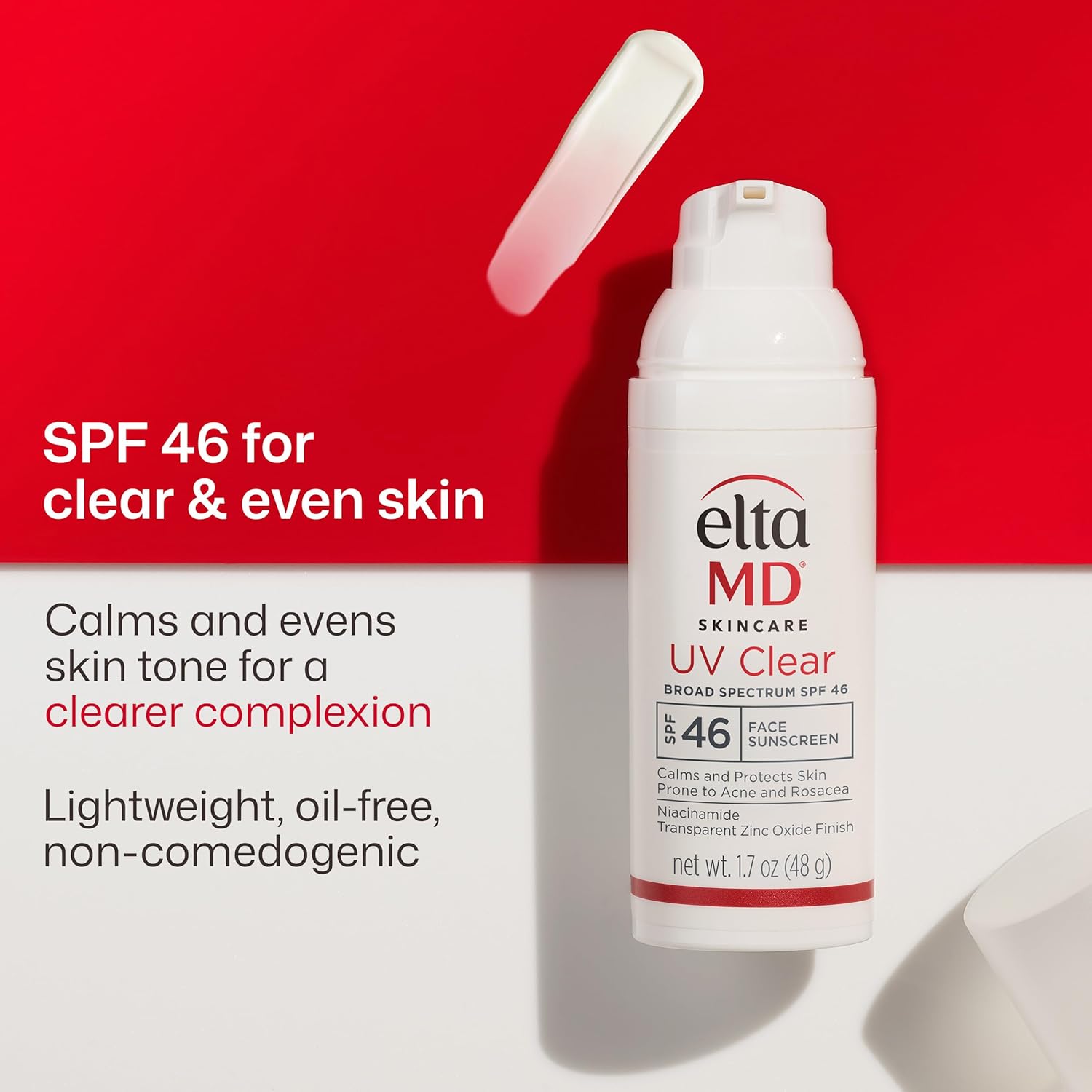
EltaMD UV Clear Broad-Spectrum SPF 46 is probably the most frequently recommended zinc oxide sunscreen for sensitive and acne-prone faces. It carries 9% zinc oxide (relatively low concentration), is fragrance-free, and leads with niacinamide. The low zinc concentration keeps cast minimal; the trade-off is that SPF 46 is solid but not the ceiling — trail runners or cyclists logging multi-hour sun exposure may want to layer or re-apply more frequently. Reviewers across Byrdie, Allure, and dermatology forums consistently rate the texture as unusually light for a mineral formula. The tinted version adds a light buff tone that works reasonably well on light-to-medium complexions.
Supergoop! Unseen Sunscreen is chemical-filter-based (not zinc oxide) and falls outside the mineral-only scope of this guide, but it’s worth naming here because so many sensitive-skin buyers consider it. If your skin tolerates chemical filters, the cast issue disappears entirely. If you’ve had reactions to avobenzone, octinoxate, or oxybenzone — the common chemical actives — zinc oxide remains the right call regardless of finish.
Blue Lizard Sensitive Face SPF 50+ uses a combination of zinc oxide and titanium dioxide at concentrations sufficient for SPF 50+ without relying on nano particles. Reviewers consistently note it runs more opaque than EltaMD — this is the formula to reach for if you’re fair-skinned and prioritize maximum mineral protection over seamless finish. Owners with very fair or sun-sensitive complexions (Fitzpatrick Type I–II) report it as their go-to for extended outdoor days.
Colorescience Sunforgettable Total Protection Brush-On SPF 50 solves the re-application problem more than the initial white cast — it’s a powder-based mineral SPF that goes over makeup, meaning mid-day reapplication (the step most people skip) becomes realistic. Byrdie editors and reviewers note it photographs cleanly and doesn’t disturb base makeup. For a cyclist or trail runner who starts their day with a liquid sunscreen and needs to top up hours later without removing sunscreen or wiping off sweat, the brush-on powder format is a practical workflow fix.
ISDIN Eryfotona Actinica SPF 50+ deserves mention for a different reason: it’s one of the few sunscreens available in the U.S. market that contains photolyase, an enzyme derived from algae that research (including studies available through NIH/NCBI) suggests may help repair UV-induced DNA damage in addition to preventing it. Its zinc oxide concentration is lower, giving it a lighter finish. It’s a premium-tier product (street price generally $40–$55 for 100 ml), and EWG’s sunscreen guide has rated it favorably for ingredient safety.
Matching Formula to Skin Tone and Use Case
White cast is not a binary pass/fail — it’s a spectrum, and it’s also highly dependent on your baseline complexion.
Fitzpatrick I–II (very fair, light): Standard micronized zinc formulas at SPF 50 are usually wearable with minimal visible cast. The white-on-white effect is less visually pronounced. Priority should be coverage breadth and reef-safety compliance if you’re near Hawaii or Florida waters (where oxybenzone- and octinoxate-containing sunscreens face legislative restrictions).
Fitzpatrick III–IV (medium to olive): This is the zone where white cast becomes most problematic in daylight and photography. Tinted mineral SPFs are strongly worth prioritizing here — the iron oxide pigments neutralize the white reflection and add visible-light protection that benefits melasma-prone complexions specifically.
Fitzpatrick V–VI (deep brown to dark): A clear zinc oxide formula at any meaningful concentration is likely to leave an ashy or grey cast that’s difficult to blend out. Tinted formulas in this range need sufficient shade depth to actually counteract the white reflection rather than just adding a light buff tint. Brands like Black Girl Sunscreen (chemical-filter based) built an audience specifically from this gap in the mineral category. If you’re committed to zinc oxide for skin sensitivity reasons, the EltaMD UV Elements Tinted SPF 44 and the Colorescience brush-on powder are the formulas that reviewers with deeper complexions most frequently recommend as workable.
The Decision Rule
Here’s the clean if-then framework for navigating this category:
- If your skin is reactive or rosacea-prone and you’re fair to medium-toned: EltaMD UV Clear (untinted or lightly tinted) is the default recommendation, with Blue Lizard Sensitive for high-exposure outdoor days.
- If you’re medium to olive-toned and white cast is your primary friction point: Prioritize tinted zinc formulas with iron oxides. The EltaMD tinted or ISDIN Actinica are well-regarded in this range.
- If you’re deep-toned and mineral-committed: Accept that the current tinted mineral category is underserved for your complexion. The Colorescience brush-on powder over a lightly-tinted liquid base gives the most flexibility.
- If re-application compliance is your weakest link (it is for most people): Add the Colorescience brush-on regardless of your other formula choice. Consistent SPF 30 re-applied beats theoretical SPF 50 applied once.
- If you’re in a reef-safe jurisdiction (Hawaii, Key West, or traveling to Palau): Confirm your formula is oxybenzone- and octinoxate-free before you pack. All of the zinc oxide formulas named above clear this requirement.
The white cast problem is solvable — the answer is just rarely one product doing everything. Most consistent mineral sunscreen users end up with a liquid zinc SPF for morning application and a powder or tinted formula in the bag for the rest of the day.