If you’ve spent any time researching sunscreen, you’ve probably noticed that a two-ounce bottle can cost as much as a nice dinner — and still run out by the end of a long weekend outdoors. Premium sunscreens (the kind dermatologists and serious outdoor enthusiasts reach for) generally fall into two protection categories: mineral, which uses zinc oxide or titanium dioxide to physically deflect UV rays, and chemical, which uses compounds like avobenzone or octinoxate to absorb and dissipate UV energy before it damages skin. Both approaches can earn broad-spectrum status — meaning they protect against both UVA rays (the aging, deeper-penetrating kind) and UVB rays (the burning kind) — and both appear across the $20–$65 price range. What separates the premium tier isn’t just the active ingredients; it’s the elegance of the base formulation, the cosmetic finish, the stability of those actives over time, and, often, third-party verification of the SPF rating. This article breaks down the deal patterns for three brands that anchor the premium end of the market — EltaMD, Supergoop, and ISDIN — and gives you a decision framework for when to pay full price, when to wait, and how to make a bottle last.
| EDITOR'S PICKEltaMD UV Clear Face Sunscreen… | Mid-tier[EltaMD UV Daily Face Sunscreen](https://www.amazon.com/dp/B00464EC1E?tag=greenflower20-20)… | Budget pick[EltaMD UV Sport Sunscreen Lotio](https://www.amazon.com/dp/B008VK3F94?tag=greenflower20-20)… | |
|---|---|---|---|
| Type | Face Sunscreen | Face Sunscreen | Face & Body Sunscreen |
| SPF | — | — | 50 |
| Size (oz) | 1.7 | 1.7 | 3 |
| Oil-Free | ✓ | — | — |
| Tint | Untinted | Untinted | — |
| Price | $45.00 | $41.00 | $27.20 |
| See on Amazon → | See on Amazon → | See on Amazon → |
What You’re Actually Paying For in the Premium Tier
Price doesn’t automatically equal better protection — the American Academy of Dermatology notes in its Sunscreen FAQs that any broad-spectrum SPF 30 or higher, applied correctly, delivers meaningful photoprotection. But premium formulas do tend to solve real problems that drugstore options don’t.
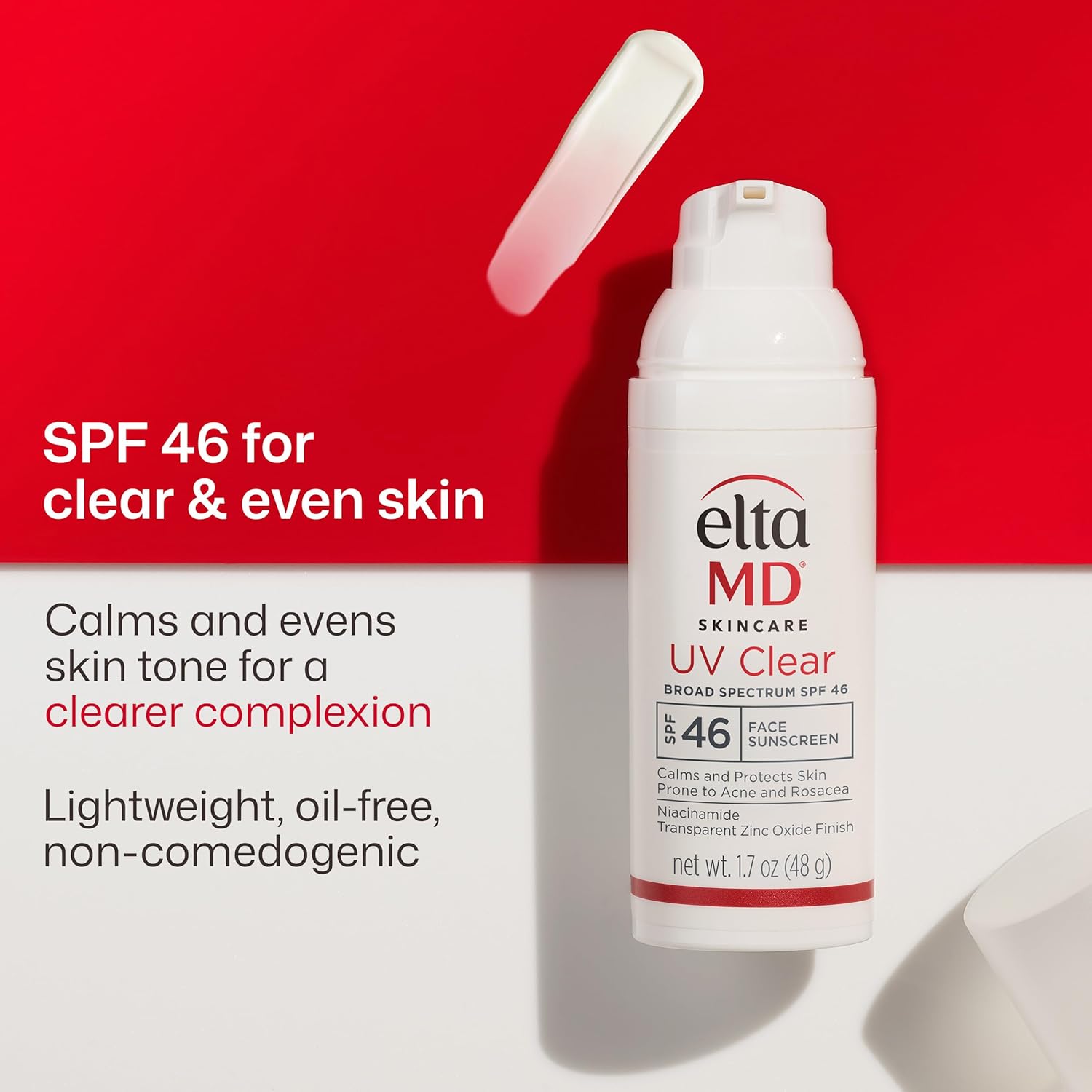
EltaMD UV Clear Broad-Spectrum SPF 46 ($36–$42 for 1.7 oz) is a mineral-chemical hybrid (zinc oxide plus a single chemical filter, octinoxate) that sits noticeably light on oily and acne-prone skin. The Skin Cancer Foundation lists it as a recommended product. Reviewers at Byrdie and Allure consistently name it the go-to for anyone who wants dermatologist-grade mineral protection without a chalky cast. It’s fragrance-free and niacinamide-spiked, which means it doubles as a mild skin-tone evening product — a real value-add over a $12 drugstore option with comparable SPF numbers.
Supergoop! Unseen Sunscreen SPF 40 ($38–$42 for 1.7 oz) is a 100% chemical-filter formula with a velvety, primer-like texture that disappears completely on application. It’s one of the few SPF products that reviewers at both Allure and Byrdie describe as genuinely invisible under makeup. The tradeoff: it uses chemical filters that are not reef-safe under Hawaii’s Act 104 or Key West’s sunscreen restrictions — a meaningful consideration if you swim in protected marine areas.
ISDIN Eryfotona Actinica SPF 50+ ($55–$65 for 3.4 oz) is the outlier here — a European-formulated, 100% mineral sunscreen that pairs zinc oxide with DNA repair enzymes (photolyases from algae). The Skin Cancer Foundation has highlighted DNA repair enzyme technology as a complementary strategy to UV blocking. The EWG’s 2025 Guide to Sunscreens gives ISDIN Eryfotona Actinica strong marks for both ingredient safety and UVA protection breadth. Per-ounce, it’s actually competitive with EltaMD and Supergoop when you do the math.
By the Numbers
| Product | Size | Street Price | Price per oz | Filters |
|---|---|---|---|---|
| EltaMD UV Clear SPF 46 | 1.7 oz | ~$38 | ~$22/oz | Mineral + chemical hybrid |
| Supergoop! Unseen SPF 40 | 1.7 oz | ~$40 | ~$24/oz | Chemical only |
| ISDIN Eryfotona Actinica SPF 50+ | 3.4 oz | ~$60 | ~$18/oz | 100% mineral |
At full price, ISDIN’s larger tube is actually the most economical of the three per ounce — a fact that gets lost when shoppers compare sticker prices.
When These Brands Actually Go on Sale (and How Deep the Discounts Get)
The premium sunscreen market has predictable sale rhythms worth knowing if you’re buying for a whole season or stocking up for a family.
Memorial Day and July 4th windows are the heaviest promotional periods. Retailers including Dermstore, Ulta, and Amazon run sitewide sales that typically put EltaMD and Supergoop in the 20–30% off range. Wirecutter’s sunscreen coverage has noted that these sales are often the deepest discounts these brands authorize in a calendar year.
Cyber Monday / Black Friday catches many sun-protection buyers off guard — late November feels counterintuitive for sunscreen shopping, but shelf-stable sunscreen has a typical expiration of 2–3 years from manufacture, so stocking up in November for the following summer is a sound strategy. Supergoop!‘s direct-to-consumer site has historically run 20% sitewide during this window. ISDIN has offered bundle discounts (Eryfotona Actinica + Fusion Water) through authorized retailers.
End-of-season clearance (August–September) produces opportunistic discounts from retailers clearing shelf space, but selection narrows. You may find a 30% markdown on a formula you don’t use as frequently.
Subscription and loyalty programs deserve more attention than they usually get. EltaMD sells directly through its authorized site with a subscription option that generally shaves 10–15% off recurring orders — not as dramatic as a Memorial Day event, but reliable across the year. For households burning through 2–3 tubes of UV Clear per season, the subscription math adds up.
One pattern across aggregated reviews and deal-tracker communities: ISDIN rarely participates in deep promotional events at the brand level, which means opportunistic retailer markdowns (especially around new product launches or formula updates) are often the only route to a meaningful discount. Setting a price alert on the Eryfotona Actinica ASIN through a price-tracker tool is worth the two minutes it takes.
What’s Worth Paying Full Price For — and What Isn’t
This is where the decision framework matters. Not every formula justifies waiting for a sale.
Pay full price without hesitation if:
-
You have acne-prone, sensitive, or rosacea-affected skin and EltaMD UV Clear is the only formula that doesn’t break you out. The Skin Cancer Foundation and AAD both emphasize consistent daily use as the foundation of UV protection — and a sunscreen you’ll actually wear every day beats a cheaper one you’ll skip. The premium over a drugstore zinc option is roughly $25–30 per bottle; the cost of a single dermatology visit or a course of treatment for a flare-up is multiples of that.
-
You’ve been prescribed or strongly recommended a specific formula by a dermatologist. Formulary consistency matters if you’re managing a photosensitive condition or post-procedure skin.
-
You’re heading into a high-exposure event (a week of open-water swimming, a high-altitude trail run, a cycling stage) and you’re out of your go-to product with no time to wait for a sale.
Wait for a sale if:
-
You’re trying a formula for the first time and you’re not sure about the texture or finish. Buying at full price to discover you hate the Unseen Sunscreen’s silicone feel on humid days is a $40 mistake. Wait for a Ulta 21 Days of Beauty event, when Supergoop! has historically been featured at 50% off for a single day — a deep enough discount to make a trial purchase low-stakes.
-
You’ve already confirmed the formula works and you want to stock up. The stability window on these products (typically 2–3 years from manufacture, per FDA labeling requirements) means buying 2–3 units at a Memorial Day sale is smart planning, not hoarding.
-
You’re choosing between two formulas you trust equally and price is the deciding variable.
Don’t wait for a sale if it means skipping daily use. The EWG’s 2025 Guide to Sunscreens reiterates what the research literature has shown for decades: unprotected UV exposure accumulates. The risk calculus doesn’t favor waiting six weeks for a discount.
Making a Bottle Last: Realistic Usage Math
One underappreciated lever on total annual spend is application rate. The AAD recommends one ounce (about a shot glass) of sunscreen for a full-body application, applied every two hours of direct sun exposure. For face-only use — the primary use case for EltaMD UV Clear and Supergoop Unseen — the correct amount is roughly a nickel-sized dollop, or about 1/4 teaspoon.
A 1.7 oz bottle at the correct face-application dose yields roughly 12–14 full-coverage applications. Used daily as a morning moisturizer replacement, that’s less than two weeks per bottle — meaning the annual cost for daily facial SPF at full price runs $700–$900 for the premium tier. That’s the number that makes sale-stacking and subscription pricing genuinely meaningful.
For trail runners, cyclists, and open-water swimmers who need full-body coverage during activity, the math shifts entirely. At one ounce per full-body application and two reapplications over a four-hour session, you’re burning through 3 oz per outing — which means a single 3.4 oz ISDIN tube covers barely one long outdoor day. Reviewers at Outside Online and Runner’s World consistently flag this as the reason serious outdoor athletes use a premium formula on the face and a higher-volume, lower-cost SPF 50 on body surfaces — a hybrid strategy that preserves the formulation benefits where they matter most without bankrupting the season’s gear budget.
The Decision Rule
If you know the formula works for you → stock up at the next major sale window (Memorial Day being the most reliable) and buy 2–3 units to cover the season.
If you’re evaluating a new formula → wait for a single-day event discount (Ulta 21 Days, Dermstore anniversary) to reduce trial cost, then commit once you’ve confirmed the fit.
If you need full-body athletic coverage for extended outdoor sessions → pair a premium facial formula with a higher-volume broad-spectrum SPF 50 body product; the ISDIN 3.4 oz makes the most economic sense of the three at face-level coverage rates.
If daily use consistency is at risk because of price → buy now at full price. The Skin Cancer Foundation, the AAD, and the EWG are aligned on this: consistent protection today is worth more than the perfectly timed purchase you’re still waiting on in July.
The premium sunscreen market rewards buyers who know the sale calendar and do the per-ounce math — but it punishes anyone who lets a pricing strategy become a reason to skip protection. Know your formula, know the rhythm, and stock the medicine cabinet before the season peaks.