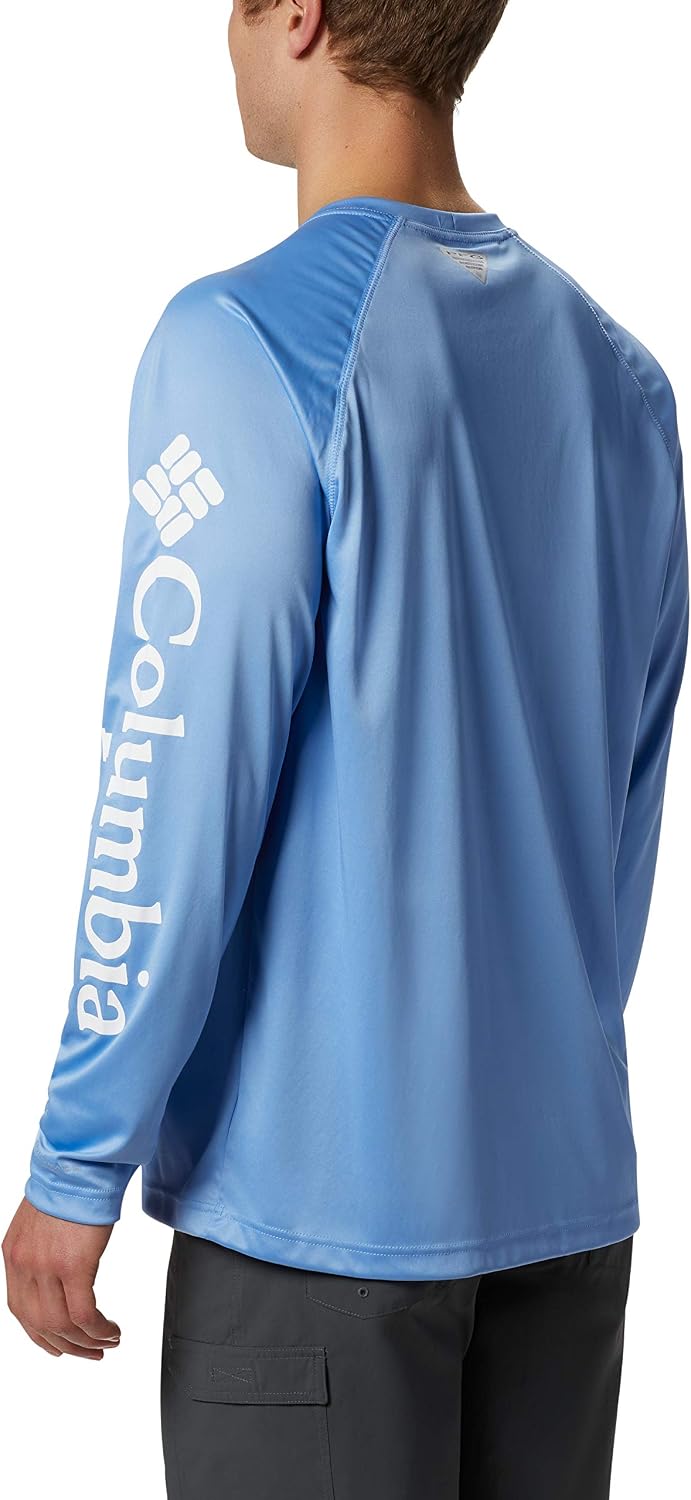
A sun shirt is exactly what it sounds like — a lightweight long-sleeve shirt engineered to block ultraviolet (UV) radiation, the part of sunlight that causes sunburn, accelerated skin aging, and increased skin cancer risk. The number you’ll see on the tag, UPF 50+, is a fabric protection rating: UPF stands for Ultraviolet Protection Factor, and a UPF 50 rating means the fabric blocks at least 98% of UV rays from reaching your skin. Think of it as the clothing equivalent of SPF (Sun Protection Factor), which you already know from sunscreen — except UPF covers both UVA and UVB rays simultaneously, and unlike sunscreen it doesn’t wash off, sweat off, or expire mid-hike. If you’re spending serious time outdoors — on the trail, in the water, on the bike — this article will show you exactly how to evaluate whether a shirt’s rated protection will hold up in your specific conditions, and what tradeoffs to weigh before buying.
You already know the vocabulary. What’s worth sharpening is the gap between what a UPF rating promises in a lab and what it delivers when you’re three hours into a ridge run at elevation, or paddling through salt water with a soaked shirt plastered to your shoulders.
The UPF 50+ Rating: What It Measures and Where It Can Break Down
The Skin Cancer Foundation notes that UPF ratings are determined under standardized laboratory conditions — dry, unstretched fabric, measured with controlled spectrophotometry. That’s the ideal-state number. Real-world performance depends on four variables that the lab doesn’t replicate:
1. Wet fabric. When certain fabrics — particularly standard polyester weaves and most cotton blends — get saturated, the weave structure can shift and the UV transmittance increases. The American Academy of Dermatology (AAD) specifically flags wet cotton as providing minimal UV protection regardless of how tightly woven it is dry. Purpose-built UPF fabrics from brands like Coolibar and Solbari are engineered to hold their rating when wet; the key is whether the brand has published wet-state UPF testing, not just dry-state certification.
2. Fabric stretch. Stretch opens the weave. A four-way-stretch fabric under tension — which describes most athletic-cut sun shirts during trail running or cycling — will transmit more UV than it does when hanging on a rack. Tightly woven fabrics with minimal stretch (think dense 150–200 GSM nylon or polyester twill) maintain their ratings better under load. Backpacker’s UPF clothing guide specifically calls this out when evaluating hiking shirts: the athletic-cut shoulder panels on lightweight running shirts are often the first to degrade under stretch.
3. Mechanical wear. Wash cycles, abrasion from pack straps, and general fabric fatigue reduce UPF over time. Solbari publishes wash-durability data showing their UPF 50+ rating maintained after 40 wash cycles — a useful benchmark to look for when brands make durability claims.
4. Coverage architecture. A UPF 50+ collar that stops at mid-neck, a half-zip that gaps when you tilt your head forward, or sleeves that ride up past the wrist during a paddle stroke — these design failures are where UV exposure actually happens. The rating on the label is only as useful as the geometry of the garment.
The practitioner’s takeaway: Don’t shop UPF ratings alone. Cross-reference the rating with the activity context — wet vs. dry, static vs. dynamic, pack-wearing vs. open paddling — and verify whether the brand discloses wet-state or stretch-state testing.
Trail vs. Water: Why the Same Shirt Rating Plays Out Differently
Outside Online’s comparative coverage of sun shirts consistently separates “trail/hiking” and “water/paddle” categories even among shirts with identical UPF 50+ ratings. That editorial decision reflects a real functional divergence.
Trail and hiking context
On trail, UV exposure accumulates across the full day at altitude — where UV intensity increases roughly 4–5% per 1,000 feet of elevation gain, per figures cited in Runners World’s sun protection overview. The priorities here are:
- UPF rating durability under sweat (not saturation). Moderate perspiration doesn’t degrade most UPF fabrics significantly; full immersion does. Trail runners and hikers typically want fabrics that wick sweat away from the weave rather than trapping moisture, which keeps the structure intact.
- Thermoregulation vs. coverage. This is the core trail tradeoff: more coverage means more fabric means more heat. The practical resolution — which you’ll see in shirts from Patagonia Sun, Columbia PFG, and Coolibar’s activewear line — is tightly woven lightweight nylon or polyester in the 100–130 GSM range with mechanical stretch. Lighter weight holds you cooler; denser weave maintains the UPF.
- Collar and neckline geometry. At elevation, the back of the neck and upper chest are in near-constant sun exposure during climbing. Shirts with a higher crew collar or a built-in collar flap materially reduce the exposure window compared to standard V-necks.
Water and paddle sports context
Open-water swimmers, kayakers, surfers, and stand-up paddleboarders encounter a compounding challenge: direct solar UV plus UV reflected off water surfaces (water reflects up to 25% of UV radiation, per Skin Cancer Foundation data). Add full-fabric saturation and you get the wet-state degradation problem in its most extreme form.
The shirts that hold up in this environment share common engineering: nylon-dominant blends (nylon maintains UPF better when wet than polyester-dominant weaves), flat-lock seams that resist abrasion and chafing in the water, and UPF ratings that have been explicitly tested under wet conditions. Solbari’s swim and water-sport line and Coolibar’s Runga UPF 50+ shirts are frequently cited by reviewers for retaining their protection claim in water use. The tradeoff: these fabrics often feel heavier and less breathable out of the water, making them a suboptimal choice for a multi-hour trail run.
The decision frame: If your primary activity is on water, verify wet-state UPF data first. If your primary activity is on trail, prioritize weave density and cooling architecture. If you’re doing both — the common scenario for a surf-to-trail weekend — look at hybrid designs, and accept that you’re optimizing for versatility rather than maximizing either dimension.
By the Numbers: UPF Rating Context
| UPF Rating | UV Blocked | AAD Classification |
|---|---|---|
| 15–24 | 93.3–95.9% | Good |
| 25–39 | 96.0–97.4% | Very Good |
| 40–50+ | 97.5–98%+ | Excellent |
UPF 50+ is the ceiling of the standard rating scale — there is no UPF 100 on any standardized scale, even if fabrics physically block more. Per the Skin Cancer Foundation, any fabric testing above 50 is simply labeled 50+ under Australian/New Zealand Standard AS/NZS 4399, which is the testing framework most premium UPF brands certify to.
Comparing the Major Fabric Approaches (and Their Real Tradeoffs)
Tightly woven nylon and polyester
The workhorse of the UPF 50+ market. Dense weave construction is the primary UV blocking mechanism — no UV-absorbing chemicals required. Brands including Coolibar, Solbari, and Columbia use variations of this approach. Owners consistently report these fabrics hold their rating well across repeated washing and extended trail use. The tradeoff is weight and breathability: denser weave = more material = less airflow. This is why the $80–$140 shirts in this category invest heavily in moisture-wicking surface treatments and strategic mesh paneling — they’re trying to buy back cooling performance without opening the weave.
Chemically treated fabrics (UV absorbers embedded in fiber)
Some manufacturers embed UV-absorbing compounds (typically titanium dioxide or zinc oxide particles, or organic UV absorbers) into the fiber itself at the polymer extrusion stage. This can allow a lighter, more open weave to achieve UPF 50+ ratings. The concern some buyers raise: does the UV-blocking compound degrade faster than the fabric itself? Brands that use this approach don’t always publish wash-cycle durability data to the same standard as weave-dependent fabrics. When evaluating a shirt that seems unusually lightweight for its UPF claim, it’s worth checking whether the brand discloses its UPF mechanism and any durability testing behind it.
Bio-based and recycled fiber options
Patagonia’s Sun line and newer players in the sustainable outdoor apparel space have introduced shirts using recycled nylon and bio-based polyester blends that achieve UPF 50+. Reviewers at Outside Online note that the performance profile of these fabrics is generally comparable to virgin nylon equivalents in dry conditions, with some variation in wet-state retention depending on fiber architecture. If environmental footprint is a decision factor alongside protection, these options are increasingly competitive — but the tradeoff is typically a modest price premium and sometimes a slightly different hand-feel.
How to Apply This to Your Next Purchase Decision
If you’ve tracked with the above, the decision logic simplifies into a few clean forks:
If you’re primarily a trail runner or hiker at elevation: Prioritize weave-based UPF 50+ in lightweight nylon (100–130 GSM range), with a high crew neck or collar flap, from brands that publish wash-durability ratings. Coolibar’s activewear line and Patagonia’s Capilene Cool Sun Hoody are regularly cited in this category by reviewers at Runners World and Outside Online. Budget $60–$120 for this tier; shirts below $40 with UPF 50+ claims typically achieve the rating through chemical treatment on lighter fabrics and may not disclose degradation data.
If you’re primarily in the water: Pay the extra attention to wet-state UPF certification — don’t assume the dry-state rating holds. Nylon-dominant construction outperforms polyester in this context. Solbari’s water-sport range ($90–$150) and Coolibar’s swim-specific shirts are the most frequently recommended options in aggregated reviews for users who need the rating to hold when soaked. Accept that these shirts will feel heavier and less ventilated on dry land.
If you’re both: A hybrid approach — a lightweight trail shirt with a documented wet-state rating — is the honest compromise. You’re not maximizing either dimension, but you’re not carrying two shirts. Look for brands that explicitly test in both conditions rather than simply listing a single dry-state UPF 50+ certification.
If you’re advising someone new to UPF apparel: The AAD’s guidance is a clean anchor point — UPF 50+ from any reputable brand beats daily SPF reapplication for coverage reliability over a multi-hour outdoor activity. The fabric conversation above matters most once you’ve already committed to wearing a sun shirt routinely. Get the habit established first; optimize the fabric later.
The UPF 50+ label is a genuine standard, not marketing shorthand — but it’s a starting condition, not a complete answer. The shirt that earns its rating in your activity is the one that accounts for how your specific use case interacts with the fabric. That’s the translation gap this article was built to close.