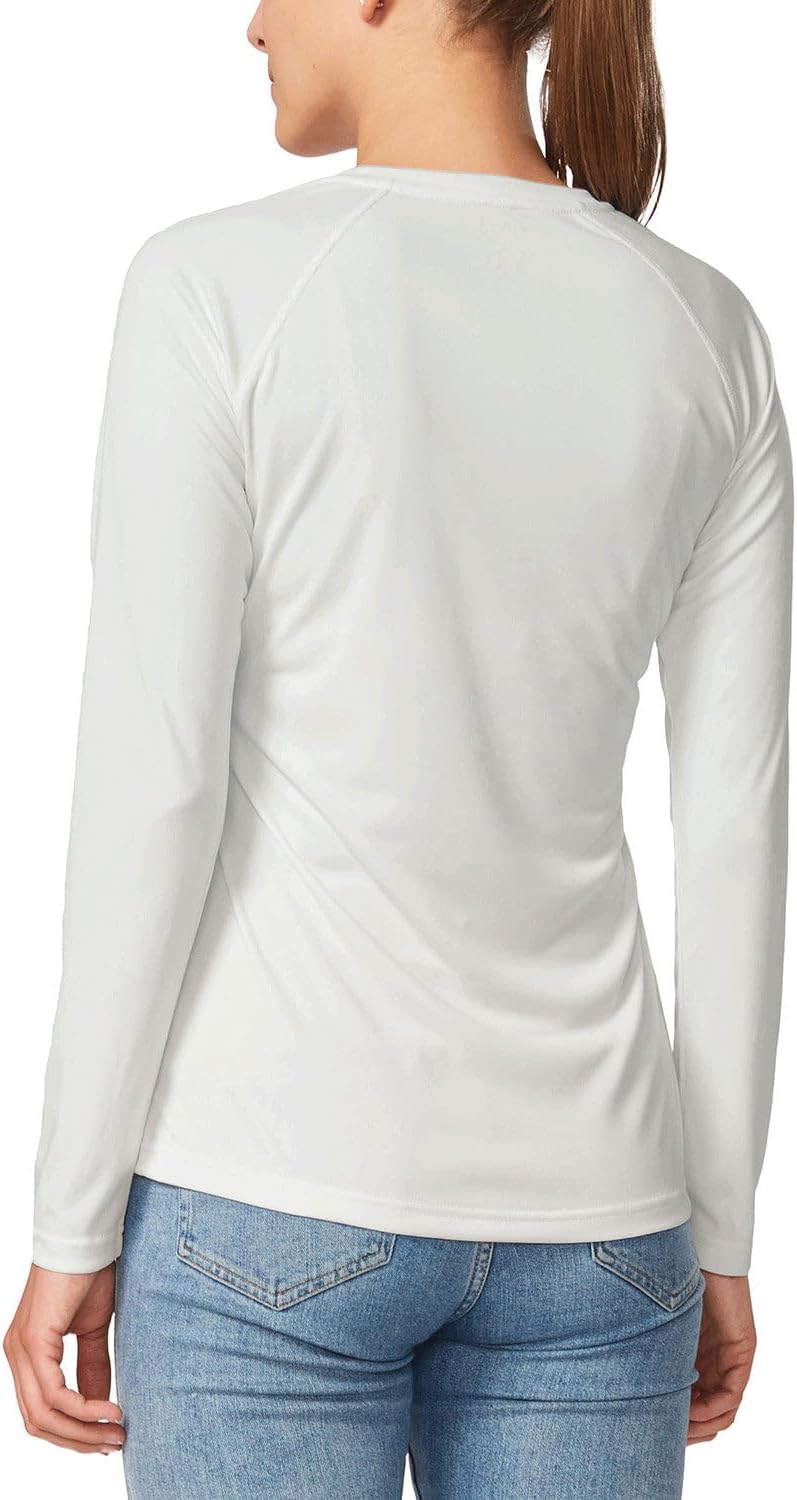
If you’ve ever come home from a long hike or a morning swim with a sunburned forearm despite wearing sunscreen, you already understand the problem this article solves. A UPF 50+ sun shirt is a garment rated to block at least 98% of the sun’s ultraviolet radiation — both the UVA rays that age skin and the UVB rays that burn it — before it ever reaches your skin. UPF (Ultraviolet Protection Factor) is the fabric equivalent of SPF in sunscreen: a UPF 50 rating means only 1/50th of UV gets through. The Skin Cancer Foundation’s guidance on sun-protective clothing confirms that a well-constructed UPF 50+ garment is one of the most reliable forms of sun protection available, because unlike sunscreen it doesn’t wear off, sweat off, or require reapplication. This guide is for women who already know they want a UPF 50+ sun shirt — and now need to figure out which construction, weight, and brand actually matches their activity. We’ll rank the field across three real-world use cases, show you where the trade-offs live, and give you a clear decision rule at the end.
| EDITOR'S PICKbaleaf Women's Sun Protection J… | Mid-tierbaleaf Womens UPF 50+ Sun Shirt… | Budget pick[IUGA Rash Guard for Women UPF 5…](https://www.amazon.com/dp/B0BBR4ZVZ3?tag=greenflower20-20) | |
|---|---|---|---|
| UPF Rating | — | 50+ | 50+ |
| Pockets | — | — | ✓ |
| Quick Dry | — | ✓ | ✓ |
| Breathable | — | ✓ | — |
| Price | $29.99 | $19.99 | $14.99 |
| See on Amazon → | See on Amazon → | See on Amazon → |
Why “UPF 50+” Isn’t Enough Information on Its Own
Here’s where practitioners get tripped up: every garment in this category claims UPF 50+, but the spec tells you almost nothing about how that rating holds up under water, after 40 washes, or when the fabric is stretched taut across shoulders during a swim stroke.
The American Academy of Dermatology’s overview of UV protection notes that fabric UPF depends on weave tightness, fiber type, color, and — critically — whether the fabric is wet. Loosely woven “UPF 50+” fabrics can drop to UPF 10–15 when soaked through. That’s a catastrophic failure mode for open-water swimmers and surfers. Meanwhile, a tightly woven nylon-spandex blend designed for water holds its rating wet or dry, but often runs hot on a summit ridge at elevation.
The practical split is this:
- Water-activity fabrics (nylon/spandex, polyester/spandex): Rated wet. Denser weave. Faster dry time on skin. Less breathable in still, hot air.
- Trail/hike fabrics (woven polyester, bamboo-polyester blends, technical mesh): Rated dry. More breathable. Some lose meaningful UPF when soaked with sweat or rain.
Wirecutter’s updated 2025 sun-protective clothing picks specifically flag this distinction, noting that buyers shopping for water sports should prioritize brands that publish wet-UPF data, not just dry-UPF lab results.
One more variable that matters: wash durability. The industry standard for claiming a wash-durable UPF rating is 40 laundering cycles. Brands like Coolibar and Solbari publish this explicitly. Some fast-fashion UPF shirts do not, which means that $28 shirt may be UPF 50+ out of the bag and UPF 20 by fall.
The Three Use-Case Categories — and What Each Demands
Category 1: Open-Water Swim / Surf / Paddleboard
What the activity demands: Full wet-UPF integrity, minimal drag, four-way stretch, flatlock seams that don’t chafe when wet, and a fit that stays put during strokes or duck-dives.
The clear pick at the premium tier: Coolibar’s UPF 50+ Swim Shirt line (roughly $70–$95 in the 2026 market) is the most-cited option in this category across aggregated reviews. Owners consistently report that the SunGuard fabric holds its shape and coverage through seasons of regular use, and the brand publishes wet-UPF testing data — a non-negotiable for anyone doing more than casual wading. The fit runs trim through the torso, which matters for drag reduction.
The value-tier option: Solbari’s Swim & Sun Rashguard (around $65–$80) earns consistent marks from reviewers for its lightweight feel and color retention after repeated salt and chlorine exposure. Solbari’s published spec sheets put the wash durability at 40+ cycles, matching the Coolibar standard.
The trade-off to name: Both options prioritize wet performance over trail breathability. Wearing either on a hot dry hike will feel restrictive and warm compared to a woven trail shirt. Don’t cross-shop these into hiking unless you’re doing a beach-to-trail crossover where water performance is the primary load.
Category 2: Summit Hike / Alpine Day Tour
What the activity demands: Breathability in aerobic effort, moisture-wicking that actually moves sweat away from skin, a looser fit that layers under a pack harness without binding, and UPF integrity that holds when the fabric is damp with exertion sweat rather than full immersion.
The clear pick: Patagonia’s Capilene Cool Daily Graphic Shirt (around $65–$75) comes up repeatedly in Outside Online’s sun hoodie reviews and in Backpacker Magazine’s sun-shirts-for-hiking roundup as the benchmark for trail breathability at this price point. The recycled polyester construction is certified to UPF 50+, the loose weave moves air aggressively, and the fit has enough room through the shoulders to layer comfortably under a pack. The caveat: Patagonia does not publish a wet-UPF figure, which matters for stream crossings or sustained rain.
The premium splurge: Solbari’s UPF 50+ Zip Top ($120–$145) and Coolibar’s Largo Sun Hoodie ($95–$115) both earn attention from the serious photoprotection buyer segment. Reviewers at this tier consistently note longer per-garment lifespans and more consistent UPF maintenance across wash cycles compared to mid-market options. For someone treating sun-protective clothing as a genuine skin-health investment rather than a seasonal accessory, the per-wear math over a three-year horizon looks better at the premium tier.
The value-tier option: Columbia’s PFG Tamiami II (around $45–$55) is a dependable workhorse for occasional hikers who want UPF coverage without the premium price. Owners report solid durability for casual use, though reviewers doing high-volume trail days note it runs warmer than the Patagonia option.
Category 3: Trail Running / Cycling / Multi-Sport
What the activity demands: The most technically demanding category. You need UPF integrity under high sweat output, a fit that doesn’t catch wind or ride up at high cadence, and enough stretch to allow full range of motion. Breathability and moisture management are the dominant variables — coverage is table stakes.
The pick: This is the thinnest segment of the dedicated UPF market, because most dedicated running and cycling apparel brands still under-index on UPF certification. The gap is real. Outside Online’s 2025 sun hoodie review notes this directly, observing that lightweight performance sun hoodies from the specialty UPF brands often work as well or better for running as category-specific running shirts, simply because the fabric construction prioritizes exactly the same variables.
Coolibar’s Oahu Sun Hoodie ($85–$100) is the most-cited crossover option for this use case — owners doing trail runs and road cycling in it report that the fabric manages sweat better than expected for a UPF-primary garment, and the longer hem stays tucked during movement. The fit is trim enough that it doesn’t billow at speed.
By the Numbers
| Use Case | Top Pick | Price Range (2026) | Wet-UPF Rated? | Wash Durability Published? |
|---|---|---|---|---|
| Open-water swim / surf | Coolibar Swim Shirt | $70–$95 | ✓ Yes | ✓ 40+ cycles |
| Summit hike / alpine | Patagonia Capilene Cool Daily | $65–$75 | ✗ No | Not published |
| Trail run / cycling | Coolibar Oahu Sun Hoodie | $85–$100 | ✓ Yes | ✓ 40+ cycles |
| Premium long-term investment | Solbari Zip Top | $120–$145 | ✓ Yes | ✓ 40+ cycles |
The Trade-Off Map: What You’re Actually Choosing Between
Every decision in this category is a triangle between three variables: breathability, wet-UPF integrity, and price. You can optimize for two.
- Maximum wet-UPF + durability: Accept less breathability on hot dry days. This is the Coolibar / Solbari lane.
- Maximum breathability + low price: Accept unknown or unpublished wet-UPF performance and a faster fade on wash durability. This is the Columbia / fast-fashion lane.
- Maximum breathability + wet-UPF integrity: Pay the premium and accept a narrower selection. The Solbari and Coolibar premium tiers sit here.
The Skin Cancer Foundation’s clothing guidance reinforces this framework, noting that consumers should prioritize UPF-rated garments over “SPF clothing” marketing language that lacks third-party certification, and that published wash-durability data is a meaningful quality signal.
One factor that often goes undiscussed: color. Darker colors and denser dyes consistently test at higher UPF values than pale or white versions of the same garment. If you’re selecting between color options within a single style, Wirecutter’s sun-protective clothing analysis notes this preference for deeper tones in high-UV environments.
If X, Then Y — Your Decision Rule
Work through these in order:
If your primary activity involves water (open-water swim, surfing, paddleboarding, kayaking) → Prioritize wet-UPF certification and flatlock seam construction. Start with Coolibar’s swim line or Solbari’s rashguard tier. Don’t compromise on published wet-UPF data.
If your primary activity is high-elevation hiking or alpine touring → Prioritize breathability and loose-fit construction. The Patagonia Capilene Cool Daily is the benchmark value option. Step up to Coolibar or Solbari premium if you’re building a long-term wardrobe and want confirmed wash-durability specs.
If your primary activity is trail running or cycling → Look at Coolibar’s crossover hoodies before defaulting to running-brand options that often lack UPF certification. The per-mile sun exposure on a three-hour run is real and often underestimated. The American Academy of Dermatology’s sun protection guidance notes that UV intensity at higher elevations increases approximately 10–12% per 1,000 meters, which compounds quickly on mountain trail runs.
If you’re buying one shirt for everything → Spend at the Solbari or Coolibar mid-tier ($90–$120). The wet-UPF integrity and wash durability mean the garment actually performs across conditions rather than excelling in one and failing in another. The cost-per-wear math over 150+ uses favors the premium buy over replacing a degraded mid-market shirt every two seasons.
The one rule that applies regardless of category: verify that the garment has a third-party UPF certification (ASTM D6603 in the US, AS/NZS 4399 from Australian/New Zealand standard tests — Solbari, being Australia-based, frequently cites the latter). A brand printing “UPF 50+” on a hangtag without a testing standard attached is a yellow flag worth investigating before you commit.
Sources cited: Skin Cancer Foundation sun-protective clothing guidance; American Academy of Dermatology sunscreen and UV protection overview; Outside Online best sun hoodies review (2025); Wirecutter best sun-protective clothing picks (2025); Backpacker Magazine sun shirts for hiking roundup.