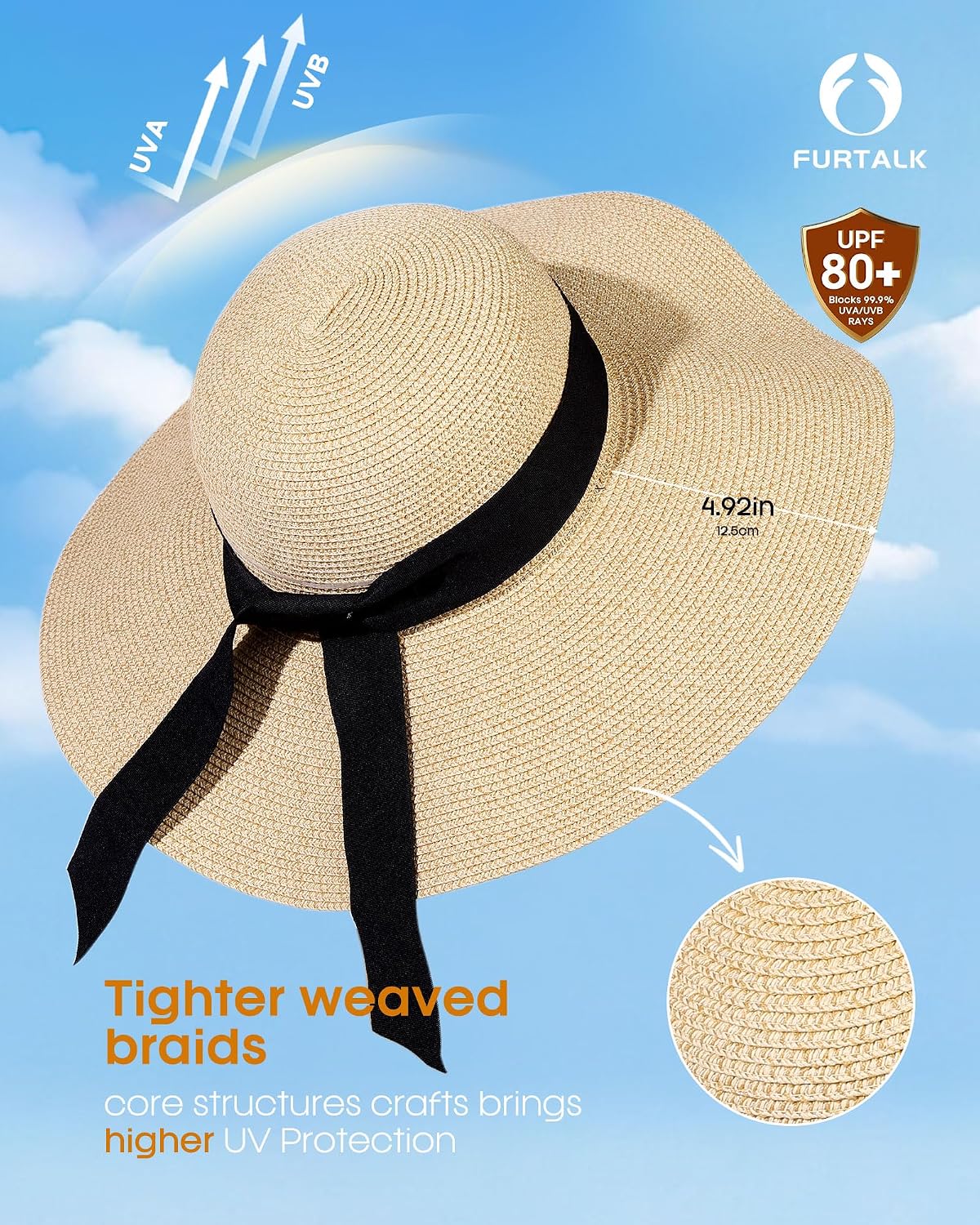
A wide-brim sun hat is exactly what it sounds like — a hat with a brim wide enough to cast meaningful shade over your face, neck, and ears. The important qualifier is meaningful. Most hats sold as “sun hats” offer no tested, certified UV protection; they’re just shade in a general sense. A hat with a genuine UPF rating (Ultraviolet Protection Factor — the fabric equivalent of SPF, measuring how much UV radiation the material itself blocks, not just the shadow it casts) is a different product category entirely. UPF 50+ means the fabric blocks at least 98% of both UVA and UVB rays passing directly through the weave. This article breaks down the two variables that actually determine how much sun a wide-brim hat stops — brim width and fabric construction — and shows you how to weigh those variables against activity type, packability, and price before committing.
If you’re already comparing hats at the $40–$120 range and wondering why two hats that look nearly identical perform very differently, this is the article that explains the mechanism behind that difference.
| EDITOR'S PICK[Leotruny Women Super Wide Brim…](https://www.amazon.com/dp/B08FRCQ1KR?tag=greenflower20-20) | Mid-tier[FURTALK Womens Sun Straw Hat Wi…](https://www.amazon.com/dp/B0DT3VLGRD?tag=greenflower20-20) | Budget pickWide Brim Sun Bucket Hat | |
|---|---|---|---|
| UPF Rating | UPF 50+ | UPF 80 | UPF 50+ |
| Material | — | Straw | — |
| Waterproof | ✓ | — | ✓ |
| Adjustable | — | — | ✓ |
| Chin Strap | — | — | ✓ |
| Price | $24.99 | $23.39 | $13.99 |
| See on Amazon → | See on Amazon → | See on Amazon → |
Why “Wide Brim” Isn’t a Protection Standard (And What Actually Is)
The term “wide brim” gets applied to anything from a 2.5-inch fedora to a 4-inch full-coverage field hat, and retailers aren’t required to be precise. The Skin Cancer Foundation’s sun-protective clothing guidance draws the practical line at 3 inches of continuous brim, calling it the threshold at which a hat begins to offer meaningful incidental shade to the ears and the back of the neck — areas that dermatologists at the American Academy of Dermatology consistently flag as high-incidence zones for squamous cell carcinoma.
Brim shade is UV reduction by geometry: the brim blocks the angle at which direct overhead sun reaches your skin. But shade and UPF-rated fabric protection are additive, not interchangeable. A loosely woven straw hat with a 4-inch brim casts shade, but UV scatters through the open weave of the crown and through the gaps in the brim itself. Researchers cited in studies indexed by the National Institutes of Health (ncbi.nlm.nih.gov) have documented effective UPF values as low as 3–6 in some unrated natural-straw constructions — functionally negligible.
The real protection stack looks like this:
- Brim width → controls the geometry of shadow coverage
- Fabric UPF rating → controls how much UV passes through the material itself
- Crown construction → an often-ignored third factor; mesh-crown hats can have near-zero UV blockage at the top of the head even with a 4-inch brim
When all three are optimized, a hat rated UPF 50+ with a 3.5-inch or wider brim is doing real work that sunscreen alone can’t replicate, especially over a 6-hour trail day when reapplication is easy to skip.
Brim Width Trade-offs by Activity: The Decision Matrix
Wirecutter’s sun-hat guide and Outside Online’s hat roundups both converge on a consistent framework: the right brim width is a function of how much you move your head during the activity, not just how long you’re outside.
By the numbers:
| Brim Width | Primary Benefit | Best-Fit Activities |
|---|---|---|
| 2.5–3 in | Face shade, lightweight | Trail running, cycling, travel |
| 3–3.5 in | Face + partial ear/neck coverage | Hiking, fishing, casual outdoor |
| 3.5–4+ in | Full face, ear, and neck shade | Gardening, beach, open-water swimming |
Here’s the trade-off practitioners often underweight: a 4-inch brim on a trail run creates drag, catches wind, and may require a chin strap that then becomes an annoyance at mile 8. A 2.5-inch brim on a beach day leaves your ears and the back of your neck fully exposed. Neither is wrong — they’re mismatched to context.
For outdoor workers (construction, landscaping, utility crews), the 3.5–4-inch range with a structured brim is the practical standard. Coolibar’s wide-brim styles in this range carry UPF 50+ ratings and are constructed for all-day wear without a chin strap requirement. For trail runners and cyclists, the sub-3-inch brim in a lightweight UPF-rated fabric is the right compromise — brands like Sunday Afternoons and Outdoor Research publish UPF 50+ ratings on running-specific styles with brims in the 2.5–3-inch range.
Fabric: What’s Actually Blocking the UV
This is where the intermediate-level buyer usually has a knowledge gap: the shade from the brim is intuitive, but the UV that passes through the fabric of the crown (and sometimes the brim itself) is invisible and easy to underestimate.
Weave Density and Fiber Type
UPF is determined primarily by three material factors: weave tightness (how little open space exists between fibers), fiber type (synthetic polyester and nylon generally rate higher than natural cotton or unfinished linen at equivalent weight), and whether UV-absorbing chemical treatments have been applied.
A tightly woven 100% polyester crown can achieve UPF 50+ without any chemical treatment, purely from the weave structure. A natural-straw weave with visible light transmission through the material may rate below UPF 10 even if it looks like a “sun hat” at retail.
The Skin Cancer Foundation’s certification standards (they issue a Seal of Recommendation) require independent lab testing and a minimum UPF 30 for the certification, with UPF 50+ being the highest category. Brands like Solbari, Coolibar, and Patagonia publish third-party-verified UPF ratings; many retail sun hats do not, which is the single most reliable screening question before purchase.
What Washing Does to UPF
This is a practical detail that aggregated owner reviews on Coolibar and Solbari consistently surface: wash durability varies significantly by fabric and treatment type.
- Untreated tightly woven synthetics (polyester, nylon): UPF rating is structural and does not degrade with repeated washing. Owners report sustained protection across seasons.
- UV-absorbing chemical treatments on natural fibers: the treatment can degrade over 30–40 wash cycles. Some brands publish a wash durability rating; if they don’t, that’s a flag worth noting.
- Natural straw or raffia: not wash-rated for UPF at all; wetting and drying cycles can physically distort the weave, further reducing any incidental UV blockage.
For a hat used by a trail runner or open-water swimmer — people who are sweating into the hat or submerging it repeatedly — a structurally-rated synthetic is the correct call. For a gardener wearing the hat 2–3 times a week with occasional spot-cleaning, a treated natural-fiber hat in the UPF 30–50 range may be adequate and more comfortable in high heat.
The Packability Penalty (And When It Matters)
One of the most common compromise decisions in wide-brim hat buying is between packability and protection consistency — and it’s worth naming the trade-off explicitly rather than letting marketing language obscure it.
Packable hats (crushable brims, roll-up designs) are built for travel and multi-activity days where the hat needs to fit in a pack. The construction trade-off is that the brim is softer and more likely to deform under pack pressure. A deformed brim narrows effective coverage width — if your 3.5-inch brim is folded to one side after being stuffed in a hip pack for two hours, it may be functioning as a 2-inch brim on one side of your face.
Outside Online’s gear reviews note this as a known weakness in several otherwise well-rated packable designs. The practical fix: packable hats work best when you’re actually wearing them continuously (travel, beach days) rather than alternating between wearing and packing.
Structured brim hats — wired or stiffened — maintain their geometry and therefore their coverage consistency. They don’t pack flat. For construction workers, cyclists on long road rides, and gardeners who wear the hat start-to-finish, the structured brim is the better protection investment even if it’s less convenient to store.
How to Read a Hat’s UPF Claim Before You Buy
Not all UPF claims carry equal weight. Here’s a practical filter:
Trustworthy signals:
- Third-party lab certification is named (ASTM D6544 is the standard test method for UV-protective textiles in the U.S.; AS/NZS 4399 is the Australian/New Zealand standard, which is also widely accepted and used by Solbari)
- The Skin Cancer Foundation Seal of Recommendation appears on packaging or the product page
- The brand publishes per-product UPF values (not just a blanket “UPF 50+” marketing claim across all products)
Weaker signals:
- “UPF 50+” stated without a named test standard or third-party verifier
- UPF claim applies only to the crown, not the brim (some manufacturers test selectively)
- No mention of wash durability for treated-fabric claims
The American Academy of Dermatology’s sun protection guidance recommends hats with a brim of at least 3 inches and a UPF 50+ rating as the meaningful protection threshold for outdoor activity — not one or the other. That’s the standard worth holding to.
If X, Then Y: The Decision Rules
You’ve done the reading. Here’s how to map it to a purchase decision:
If you’re a trail runner or cyclist who needs the hat for 2–4 hour efforts and it will live in a pack between uses: prioritize a UPF 50+ synthetic-fabric design with a 2.5–3 inch structured brim and a chin strap. Packability matters less than structure consistency. Sunday Afternoons and Outdoor Research both publish verified UPF 50+ specs on performance-specific styles.
If you’re buying for a child or someone with sensitive or sun-damaged skin and the hat is for beach, pool, or playground use: go 3.5–4 inch brim, UPF 50+ with a verified third-party rating, full-circumference brim (no split or partial brim cuts). Coolibar’s children’s styles and Solbari’s wide-brim range are consistently cited in dermatologist-recommended roundups precisely because their ratings are independently tested.
If you’re an outdoor worker (construction, landscaping) wearing the hat 8+ hours a day, 5 days a week: invest in a structured wide brim (3.5–4 inch) with a moisture-wicking UPF 50+ synthetic crown and a rating that’s structurally based, not chemically treated. Wash durability across hundreds of cycles is a real cost consideration. Per-hat cost of a Coolibar or Solbari wide-brim style in the $50–$90 range amortizes to negligible cost-per-wear over a full season.
If you’re a casual outdoor user — weekend hiking, travel, farmers markets — and the hat will be worn 1–2 times a week and occasionally packed: a UPF 50+ crushable design with at least a 3-inch brim is a reasonable compromise. Prioritize hats that name the test standard on the label; skip anything that only says “sun hat” without a UPF number.
The headline trade-off is simple: brim width controls where the shadow falls; fabric UPF controls how much UV passes through the material itself. You need both. Any hat that excels on one dimension but is unrated or unverified on the other is only doing half the job — and the half it’s skipping is invisible until the sun damage isn’t.